How Long Do Babies With Cleft Palates Have to Stay Before Release
A fissure is a gap or split in the upper lip and/or roof of the oral cavity (palate). It is present from birth.
The gap is there because parts of the baby'southward face did not join together properly during evolution in the womb.
A cleft lip and palate is the most mutual facial birth defect in the Great britain, affecting around 1 in every 700 babies.
What does a crack lip and palate look like?
Babies can be born with a cleft lip, a cleft palate, or both.
A cleft lip may just touch 1 side of the lip or there may be two clefts.
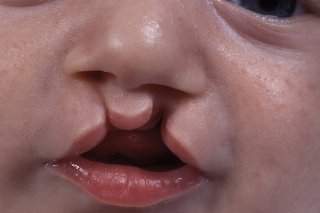
It can range from a small notch to a wide gap that reaches the nose.
A scissure palate may just be an opening at the back of the oral fissure, or it may exist a split up in the palate that runs all the mode to the front of the mouth.
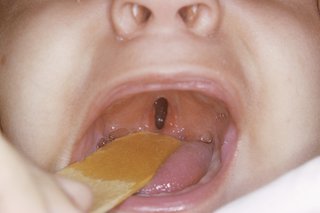
Sometimes it can be subconscious past the lining of the roof of the mouth.
The Cleft Lip and Palate Association has a photo gallery with pictures of cleft lips and palates before and afterwards surgery.
Issues related to cleft lip and palate
A cleft lip and cleft palate can cause a number of issues, peculiarly in the get-go few months subsequently birth, before surgery is done.
Issues can include:
- difficulty feeding – a babe with a scissure lip and palate may be unable to breastfeed or feed from a normal bottle considering they cannot course a good seal with their oral cavity
- hearing problems – some babies with a cleft palate are more than vulnerable to ear infections and a build-upwards of fluid in their ears (glue ear), which may affect their hearing
- dental problems – a cleft lip and palate tin mean a kid'southward teeth do non develop correctly and they may be at a higher risk of tooth decay
- speech issues – if a scissure palate is non repaired, information technology can lead to spoken communication issues such every bit unclear or nasal-sounding oral communication when a child is older
About of these bug volition improve afterwards surgery and with treatments such equally speech and language therapy.
Causes of cleft lip and palate
A scissure lip or palate happens when the structures that form the upper lip or palate fail to bring together together when a baby is developing in the womb.
The verbal reason why this happens to some babies is ofttimes unclear. Information technology's very unlikely to have been caused by annihilation you did or did non do during pregnancy.
In a few cases, cleft lip and palate is associated with:
- the genes a child inherits from their parents (although well-nigh cases are a ane-off)
- smoking during pregnancy or drinking booze during pregnancy
- obesity during pregnancy
- a lack of folic acid during pregnancy
- taking certain medicines in early pregnancy, such as some anti-seizure medications and steroid tablets
In some cases, a cleft lip or palate tin can occur as part of a status that causes a wider range of nativity defects, such every bit 22q11 deletion syndrome (sometimes called DiGeorge or velocardiofacial syndrome) and Pierre Robin sequence.
Diagnosing crevice lip and palate
A cleft lip is commonly picked upwardly during the mid-pregnancy bibelot scan done when y'all're between 18 and 21 weeks pregnant. Not all cleft lips will exist obvious on this scan and information technology's very difficult to notice a cleft palate on an ultrasound scan.
If a cleft lip or palate does non show upward on the scan, it'south commonly diagnosed immediately after birth or during the newborn physical test done inside 72 hours of nativity.
When a cleft lip or palate is diagnosed, you'll exist referred to a specialist NHS scissure team who volition explain your child's status, discuss the treatments they demand and answer any questions you have.
You lot may also find it useful to contact a back up group, such as the Crack Lip and Palate Association, who can offering advice and put you in bear on with parents in a similar situation.
Treatments for crack lip and palate
Cleft lip and cleft palate are treated at specialist NHS scissure centres.
Your child will ordinarily have a long-term care plan that outlines the treatments and assessments they'll demand as they abound upwards.
The primary treatments are:
- surgery – an operation to correct a cleft lip is unremarkably done when your babe is 3 to 6 months and an operation to repair a cleft palate is usually done at 6 to 12 months
- feeding back up – you may need advice virtually positioning your babe on your breast to help them feed, or you lot might need to feed them using a special type of canteen
- monitoring hearing – a infant born with crevice palate has a higher take chances of glue ear, which may affect hearing. Close monitoring of their hearing is important and if glue ear affects their hearing significantly, a hearing aid may be fitted or small tubes called grommets may be placed in their ears to drain the fluid
- speech and language therapy – a spoken communication and language therapist will monitor your child's speech and language development throughout their childhood and help with any spoken language and linguistic communication problems
- skillful dental hygiene and orthodontic treatment – you'll be given communication nearly looking later your kid's teeth, and they may need braces if their adult teeth don't come through properly
Read more about how cleft lip and palate is treated.
Outlook for scissure lip and palate
The majority of children treated for crack lip or palate grow up to accept completely normal lives.
Most afflicted children will not have any other serious medical bug and handling can unremarkably improve the appearance of the face and issues with feeding and speech.
Surgery to repair a crevice lip may go out a modest pink scar to a higher place the lips. This will fade over time and become less noticeable as your child gets older.
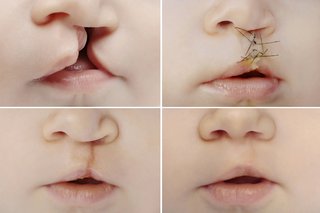
Some adults who've had a cleft lip or palate repair may be self-conscious or unhappy about their advent. Your GP may refer you back to an NHS cleft heart for further handling and support if there are any ongoing issues.
Will a cleft lip and palate happen again?
Near cases of crevice lip or palate are a 1-off and it'due south unlikely you'll have another kid with the condition.
The risk of having a child with a fissure lip or palate is slightly increased if you've had a kid with the condition before, merely the chances of this happening are thought to be effectually 2 to 8%.
If either you or your partner were built-in with a cleft lip or palate, your chance of having a babe with a crevice is likewise around 2 to 8%.
The chances of some other child being built-in with a crack or of a parent passing the condition to their child can exist college in cases related to a genetic status.
For example, a parent with 22q11 deletion syndrome (DiGeorge syndrome) has a ane in 2 gamble of passing the status to their child.
Information nearly your child
If your child has a cleft lip or palate, your cleft team will pass information about them to the National Built Anomaly and Rare Diseases Registration Service (NCARDRS).
This helps scientists look for better ways to prevent and treat this status. You can opt out of the register at any time.
Find out more than most the annals.
Page last reviewed: 13 August 2019
Next review due: xiii August 2022
Source: https://www.nhs.uk/conditions/cleft-lip-and-palate/
0 Response to "How Long Do Babies With Cleft Palates Have to Stay Before Release"
Post a Comment