Is It Ok to Eat Raw Beef Meat
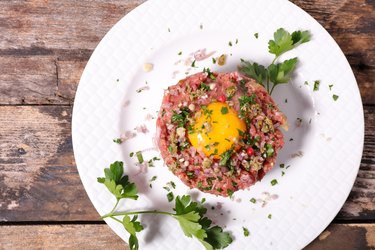
Raw footing beef, hamburger meat and dishes like steak tartare are non considered safe to eat, per USDA regulations.
Image Credit: margouillatphotos/iStock/Getty Images
While meat-loving foodies may swoon for steak tartare or yukhoe, eating raw meat or fifty-fifty rare cooked beef may not be safe. Food poisoning can occur if the raw or undercooked beef is contaminated with potentially harmful bacteria, according to the USDA.
Cooking beefiness steaks or roasts to an internal temperature of 145 degrees Fahrenheit followed past resting the meat for 3 minutes before eating kills nigh of these germs, according to the USDA. Basis beef must be cooked to an internal temperature of 160 F.
Tip
Eating raw basis beef or hamburger meat tin can crusade tum issues that tin range from balmy to life-threatening, per the USDA.
What Happens if You Eat Raw Footing Beef?
Eating raw beef, or raw meat in full general can be dangerous to your wellness. The group of bacteria Escherichia coli (Eastward. coli) includes hundreds of strains.
Several strains ordinarily inhabit the intestines of cattle and humans, and near are harmless. Simply a few East. coli strains plant in cattle can crusade food poisoning in humans if the beef is accidentally contaminated, according to the Centers for Disease Control and Prevention (CDC).
Symptoms typically develop 3 to 5 days after eating the contaminated beef, with abdominal hurting and watery diarrhea predominating. Fever does not usually occur.
Nearly people recover in 7 to 10 days. But, some people develop a potentially life-threatening complexity known as hemolytic uremic syndrome. The condition occurs when bacterial toxins trigger the destruction of circulating cherry blood cells and sudden kidney failure, per the CDC.
Steer Clear of Salmonellosis
Eating raw or undercooked beefiness tin can lead to salmonellosis, an infection caused past Salmonella bacteria. The bacteria can inhabit the digestive tract of cattle without causing disease in the animals, according to the CDC.
Symptoms usually occur 12 to 72 hours after eating Salmonella-contaminated beef. These include:
- Fever
- Tummy cramps
- Watery diarrhea
Symptoms usually persist for ii to 7 days, although normal bowel habits may not return for several months in some people, according to the Mayo Clinic.
Salmonella food poisoning tin develop into an invasive illness in which the bacteria spreads from the intestines to other parts of the torso, such every bit the bloodstream, joints or bones, per the CDC.
Warning
Invasive salmonellosis, which happens when the leaner spread from the intestines to other parts of the trunk, can be life-threatening.
Avoid Campylobacteriosis Poisoning
Campylobacter bacteria are commonly found in the digestive tract of cattle and poultry and can contaminate the meat and lead to food poisoning unless properly cooked. Virtually cases of Campylobacter food poisoning, known as campylobacteriosis, are acquired by Campylobacter jejuni, according to the CDC.
Symptoms typically begin 2 to 4 days after taking in the leaner and include:
- Abdominal cramps
- Diarrhea
- Fever
- Nausea
- Vomiting
Most people recover within 7 to 10 days but campylobacter tin spread to the bloodstream. This can be life-threatening in people with a weakened immune organization.
The CDC reports that virtually one out of every 1,000 people develops a condition called Guillain-Barre syndrome in the weeks post-obit a tour of campylobacteriosis. Guillain-Barre syndrome causes temporary paralysis, which can persist for several weeks to months.
Sentry for Listeriosis
The bacteria Listeria monocytogenes is found in cattle, poultry and the soil. Eating raw or undercooked beefiness is a potential source of Listeria infection.
Per the CDC, Listeria infection can lead to:
- Fever
- Watery diarrhea
- Nausea
- Headache
- Body aches
Symptoms in these people usually amend in a few days, just certain groups are at high risk for invasive disease, or listeriosis, according to the CDC. High-hazard groups include pregnant people, newborns, adults older than 65 and people with a weakened or suppressed immune arrangement.
Flu-like symptoms typically occur in significant people with listeriosis, which can atomic number 82 to miscarriage, preterm commitment, stillbirth or infection of the baby, co-ordinate to the CDC.
Other high-adventure groups who develop listeriosis can showroom a multifariousness of symptoms, depending on the area of the trunk infected with the bacteria. Invasion of the bloodstream and nervous system are particularly common and can be life-threatening.
Be Aware of Other Complications
Other bacteria tin potentially contaminate beef and cause food poisoning if the meat is eaten raw. These bacteria include:
- Shigella
- Staphylococcus aureus
- Hepatitis A virus
- Norovirus
Eating undercooked or raw beef also poses a take a chance for parasitic infections, such as beef tapeworm and giardiasis. Parasitic infections are a greater risk when eating raw beef in developing countries that may take inconsistent or substandard nutrient-quality standards or sanitation, per the USDA.
Is Steak Tartare Safety to Eat?
Steak tartare is a dish most commonly associated with French cuisine. If y'all're wondering whether or not steak tartare is condom to eat, the verdict is the same as it is for all ground beef and hamburger meat.
Raw beef, including steak tartare, is not considered safe because it's non cooked to an internal temperature of 160 F, per the USDA.
Warning
Simply because raw meat is served in restaurants doesn't hateful it is rubber to eat. Steak must be cooked to a safe internal temperature of at to the lowest degree 160 F.
A Prophylactic Steak Tartare Culling
If you're a fan of steak tartare, the USDA has a few suggestions for making the dish safe to eat.
-
Frying pan
-
Raw ground beefiness
-
1 egg
-
Spices and toppings, such as onions, dry mustard, Worcestershire sauce and capers
Step one: Cook Your Beef
Start by cooking the basis beef over medium estrus in a frying pan with the same spices and toppings you'd apply if you were making steak tartare — such as onions, dry mustard, capers, 1 egg and fresh chopped parsley — until the meat reaches 160 F.
Step 2: Serve With Crackers or Bread
Yous tin serve your cooked beef with toasted staff of life or crackers, and may be surprised to discover that it tastes better prepared!
Step 3: Store It Properly
Practice good food prophylactic by keeping your beefiness in an insulated container. Avert leaving the meat out at room temperature for more than two hours, every bit this will cause bacteria to multiply. Go along whatsoever leftovers in the refrigerator for 3 to 4 days maximum.
Source: https://www.livestrong.com/article/477906-can-eating-raw-beef-make-you-sick/
0 Response to "Is It Ok to Eat Raw Beef Meat"
Post a Comment